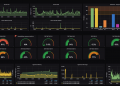
Prometheus, open source systems monitoring toolkit which is typically used with Kubernetes in a Containerized Infrastructure system can now be integrated with Mesosphere Cloud Native OS (CMOS). With its integration into the Mesos scheduler the Prometheus System Viewer (PSV) allows an administrator to view and change the state of containers in the underlying cluster. The capabilities provided by this tool are essential for managing complex application lifecycles.
Prometheus, an open source system monitoring toolkit which is commonly used with Kubernete, has been integrated with Mesosphere Cloud Native OS (CMOS). When used in conjunction with Mesos, Prometheus supports simple service discovery and scheduling of services in a scalable environment. As a result of this integration Mesosphere will be able to reduce operational costs by having only one system to manage and one controller to manage it.
In addition to providing administrators with the ability to easily view and control the status of containers the Prometheus monitoring agent will be able to provide more advanced statistics. These metrics include the time taken to perform the requests, the memory and CPU usage, the number of open requests, and the number of services that are running. In other words the metrics will show you what are the real-time performance issues within the cluster and give you an idea of the bottlenecks in the application that are causing performance issues.
Another great feature that makes using Prometheus with Mesos very useful is that the Prometheus system viewer can be configured so that when you set up a Cluster the metrics that are collected are automatically updated so that you can better monitor your infrastructure and make changes accordingly. This feature allows you to manage your infrastructure in a way that it is easier to troubleshoot problems.
When working with Prometheus in a Cluster Mesos will provide an easy way to build and deploy Container image management pipelines. The system will also provide an easy way to set up various types of deployment and scheduling rules so that you can easily build and deploy the containers based on the requirements that you have defined. These rules can then be executed on the Mesos scheduler and automatically applied.
One of the biggest benefits that Mesosphere has been able to provide to organizations using their Mesos is the ability to use it for both the creation of scheduling rules and deploying containers. As a result the Prometheus has been able to become an incredibly popular system monitoring tool within Mesosphere and the CNCF. has been able to provide the best possible performance in both of these environments. In many organizations a large amount of time is spent manually inspecting and tuning system performance and controlling resources.
{
Prometheus, open source systems monitoring toolkit which is typically used with Kubernetes in a Containerized Infrastructure system can now be integrated with Mesosphere Cloud Native OS (CMOS). With its integration into the Mesos scheduler the Prometheus System Viewer (PSV) allows an administrator to view and change the state of containers in the underlying cluster. The capabilities provided by this tool are essential for managing complex application lifecycles.
|
Prometheus, open source systems monitoring toolkit which is typically used with Kubernetes in a Containerized Infrastructure system can now be integrated with Mesosphere Cloud Native OS (CMOS). With its integration into the Mesos scheduler the Prometheus System Viewer (PSV) allows an administrator to view and change the state of containers in the underlying cluster. The capabilities provided by this tool are essential for managing complex application lifecycles.
Prometheus, an opensource system monitoring toolkit which is commonly used with Kubernete, has been integrated with Mesosphere Cloud Native OS (CMOS). When used in conjunction with Mesos, Prometheus supports simple service discovery and scheduling of services in a scalable environment. As a result of this integration Mesosphere will be able to reduce operational costs by having only one system to manage and one controller to manage it.
In addition to providing administrators with the ability to easily view and control the status of containers the Prometheus monitoring agent will be able to provide more advanced statistics. These metrics include the time taken to perform the requests, the memory and CPU usage, the number of open requests, and the number of services that are running. In other words the metrics will show you what are the real-time performance issues within the cluster and give you an idea of the bottlenecks in the application that are causing performance issues.
Another great feature that makes using Prometheus with Mesos very useful is that the Prometheus system viewer can be configured so that when you set up a Cluster the metrics that are collected are automatically updated so that you can better monitor your infrastructure and make changes accordingly. This feature allows you to manage your infrastructure in a way that it is easier to troubleshoot problems.
When working with Prometheus in a Cluster Mesos will provide an easy way to build and deploy Container image management pipelines. The system will also provide an easy way to set up various types of deployment and scheduling rules so that you can easily build and deploy the containers based on the requirements that you have defined. These rules can then be executed on the Mesos scheduler and automatically applied.
One of the biggest benefits that Mesosphere has been able to provide to organizations using their Mesos is the ability to use it for both the creation of scheduling rules and deploying containers. As a result the Prometheus has been able to become an incredibly popular system monitoring tool within Mesosphere and the CNCF. has been able to provide the best possible performance in both of these environments. In many organizations a large amount of time is spent manually inspecting and tuning system performance and controlling resources.